

What Plants Can Teach Us About Therapy, Patience, and Change
In his essay “Wait and See,” Dagem Lemma, LCSW reflects on plants, his mother, therapy, and the quiet wisdom of patience. Through the story of a struggling Money Tree gifted by his mother, Dagem considers what it means to care for something without being able to control the outcome.

For The Whole Therapist: Countertransference: How to Manage When Things Feel Too Close
Consider a therapist working with a client who shares a similar background of childhood trauma. The therapist begins to feel an overwhelming urge to protect the client, leading to over-involvement and difficulty maintaining professional boundaries. Or in another scenario, a therapist feels intense frustration towards a client who consistently resists therapeutic interventions. Or a therapist feeling discomfort or guilt related to their privilege compared to their client, these are experiences of countertransference in the client-therapist relationship. Countertransference, a concept introduced by Sigmund Freud, refers to the emotional reactions and projections a therapist experiences towards a client. While Freud contributed significantly to the development of psychoanalysis, his work has been critiqued for its patriarchal biases and lack of cultural sensitivity. Despite these flaws, his introduction of countertransference laid the groundwork for future exploration.
Decolonizing Mental Health: Indigenous Wisdom, Land, and Liberation
Mental health didn’t start with therapy. It didn’t start with Freud. It didn’t start with the DSM or CBT worksheets or mindfulness apps.
We always had ways of tending to the mind and body long before any insurance company decided what counted as a billable hour.
But here we are—trying to heal inside systems never built with us in mind. Systems that pathologize grief but ignore genocide. That diagnoses anxiety but says nothing about displacement…

I needed a change: My path from lawyer to therapist…
For as long as I can remember, I’ve felt a deep desire to help people. I’ve always enjoyed talking and, according to my parents, debating. At one point, I thought law might be a natural fit for me, especially given my passion for advocating for others. But alongside that, I was also drawn to psychology, literature, music, and art— all of which I saw as powerful expressions of the human experience. Growing up, I found myself torn between pursuing law or psychiatry, but at the time, mental health wasn’t as widely discussed, and I didn’t know much about becoming a therapist beyond psychiatry. By the end of high school, I realized medical school wasn’t for me, so I decided to pursue law school instead.

Why Therapy Might Not Be Right for You
Honestly, at this point, everybody on IG, BlueSky, and their mamas swear by therapy these days. “Go talk to somebody.” “You need to heal.” And sure, therapy is powerful—it can change lives. But let’s be real: it’s not for everybody, at least, not all the time. So, before you book that first session, let’s talk about why therapy might not be what you need right now.

Why Group Therapy Might Be the Right Choice for You
So, you’ve been in therapy for a while, and maybe you’re starting to feel like you’ve said everything there is to say. Perhaps the usual one-on-one sessions aren’t feeling as helpful as they used to, or you just don’t feel as connected to your therapist anymore. It’s totally normal to hit a bit of a wall in therapy sometimes. And if you’re starting to feel like that, you might be wondering if it’s time to switch things up. Ever thought about group therapy?
I know, the idea of sitting in a room with strangers and talking about your personal stuff can sound a little scary. But group therapy can actually be super helpful, and honestly, it might be just what you need right now. Here’s why.

You’re in Therapy… Maybe Your Child Needs It Too
Therapy isn’t just for adults. It’s a space for growth, healing, and breaking patterns—often ones you didn’t even realize were there. That’s a powerful journey. But what about your child? The one watching, absorbing, and moving through a world that doesn’t always make space for their emotions? It’s worth asking: Do they need therapy too?
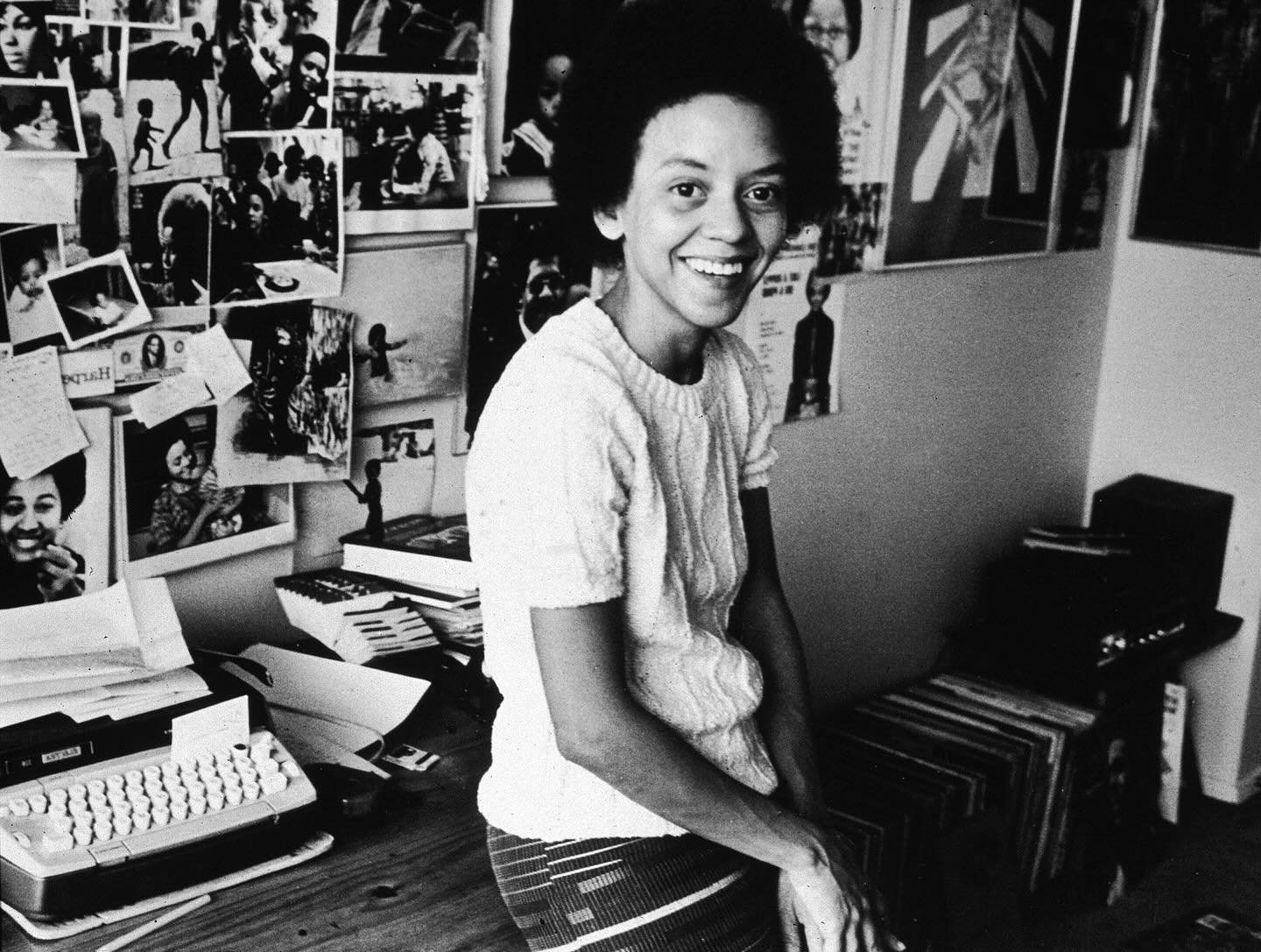
Honoring Nikki Giovanni’s Legacy of Growth and Humanity
Nikki Giovanni, a poet whose words and presence moved mountains. Born Yolande Cornelia Giovanni Jr. in 1943, she became a leading voice in Black Arts and Black Power movements. Her poems like Ego-Tripping and Knoxville, Tennessee captured the richness of Black life and imagination, blending sharp societal critique with deep personal insight. Giovanni’s book Love Poems won the NAACP Image Award, and her collection The Selected Poems of Nikki Giovanni is a testament to her range and brilliance. She wrote about love, justice, and everything in between with an honesty that resonates across generations. Nikki was also unapologetically queer, an aspect of her identity that enriched her work and underscored her courage to live authentically.

Why History Told Accurately Matters
Christopher Columbus, once regarded as a towering symbol of American heroism, is now widely recognized as a far more complicated and problematic figure. For generations, he was celebrated in the United States as the brave explorer who "discovered" America, his story woven into the fabric of national identity. However, this narrative conveniently set aside the brutal realities of colonization, disease, and devastation that followed his arrival. As more people confront the historical truths surrounding Columbus’s legacy, an important shift has begun to take place. Many are now rejecting the myths and choosing to honor Indigenous Peoples’ Day instead of Columbus Day, acknowledging the ongoing harm his legacy represents.

Are You About That Drama? Let’s Talk Drama at Work
We all know that one person who turns every small situation into an epic, season-finale-worthy drama. The real question is: could you be that person? Before you jump to any conclusions (and maybe throw shade), let’s break down a common framework that helps us understand the role we play in creating drama in both life and work using the Karpman Drama Triangle.

Did You Read What You Signed?
Do you read what you sign? Yes, I’m talking about that dense document that you get via email from the office when you are about to start with your therapist. That document that might look like a nightmare to read before your first therapy session? You know, the one filled with office policies, procedures, and an oddly specific cancellation policy. Don’t worry, we’ve all been there, skimming through the pages while nodding like we’re understanding everything when, in fact, we feel like ‘we got this’.

On Violence: An essay on the enduring challenge
Violence continues to permeate societies worldwide, leaving indelible marks on all of us. Its persistence has made it a central focus for scholars across various disciplines, particularly psychology and sociology, alongside news outlets and social media.
Rethinking Disability Through the Lens of Ableism
Disability is often viewed through a narrow lens that focuses primarily on medical and social understandings. However, disability is multifaceted and deeply entwined with political dimensions that influence how society perceives and addresses it. To better understand this complex landscape, it is essential for us to understand our ableism and explore how disability intersects with politics in order to be better allies.

Walk in Faith
Isn't it intriguing how our perception changes with distance? From high above, the world seems vast and boundless, yet intimately connected. It's akin to how we sometimes view our faith journey. When your faith or higher power feels distant, it's easy to succumb to feelings of loneliness and abandonment. You may question its presence, wondering if it's truly there amidst the chaos of your life.

Meaning Making and Untangling Our Core Beliefs
We all need safety, connection, meaning, autonomy, peace and more. We do what we can to meet these needs. Before we have the cognitive ability to understand situations in nuanced ways, we interpret information in ways that are developmentally appropriate for children. Without interference, we may unconsciously carry the thoughts and behavior that we learned from childhood into adulthood in more sophisticated ways.

Your Child’s Ethnicity Is Different from Yours
Multiethnic families are extremely common—they are as old as the United States itself and are widespread around the world. This recognition of diversity can mean that people are beginning to acknowledge their cultural heritage—and ethnicity, as well.