

Liberation-Based Therapy
What is Liberation-Based Therapy?
Liberation-Based Therapy is an approach to mental health and wellness that understands emotional distress as deeply connected to lived experience, identity, history, and systems, none of which are personal failure.
Rather than asking, “What’s wrong with you?” Liberation-Based Therapy asks, “What has happened to you and what are you navigating now?”
This approach recognizes that anxiety, depression, burnout, grief, and trauma often develop in response to chronic stress, systemic inequity, intergenerational harm, relational rupture, and unrealistic expectations placed on our bodies and minds. Many emotional responses that are labeled as symptoms are, in fact, understandable reactions to living within complex and often harmful structures.
Liberation-Based Therapy reframes therapy as a space for context, meaning-making, and reconnection. We hold that care attends not only to the individual, but to the outside conditions shaping their inner world.

Photo by: Glodi Miessi
Why Liberation Matters in Mental Health
Much of traditional mental health care isolates distress within the individual, emphasizing diagnosis, coping, or symptom reduction without sufficient attention to context. Liberation-Based Therapy challenges this narrow framing.
Systems of power such as racism, sexism, homophobia, transphobia, ableism, colonialism, economic inequality, and immigration stress shape how people experience safety, belonging, and worth. When these forces go unnamed, individuals can internalize shame, self-blame, or the belief that they are failing at life.
This therapy affirms that emotional distress is often a rational response to real conditions. The process of healing begins when experiences are understood within their social, cultural, and historical realities, not extracted from them.
Liberation-Based Therapy is for everyone. This includes people across racial, cultural, gendered, and social identities—including people of whiteness. Whiteness, like all identities, carries culture, history, and positionality within systems that have produced structural privilege. That privilege does not negate the experience of pain, grief, trauma, or disconnection. It does, however, shape how distress is experienced, understood, and responded to.
The work invites everyone to explore the full context of their lives, whether that’s personal, relational, cultural, and/or systemic. Any privilege does not negate the experience of pain, grief, trauma, or disconnection. We can work towards healing without collapsing complexity into guilt, denial, or oversimplification.
This work often resonates with anyone seeking to understand the ‘whole’ of themselves, not just symptoms.
Liberation-Based Therapy is for those who desire to understand how identity, history, power, and relationship shape our inner worlds and how awareness and accountability can open new possibilities.
Who Liberation-Based Therapy Supports
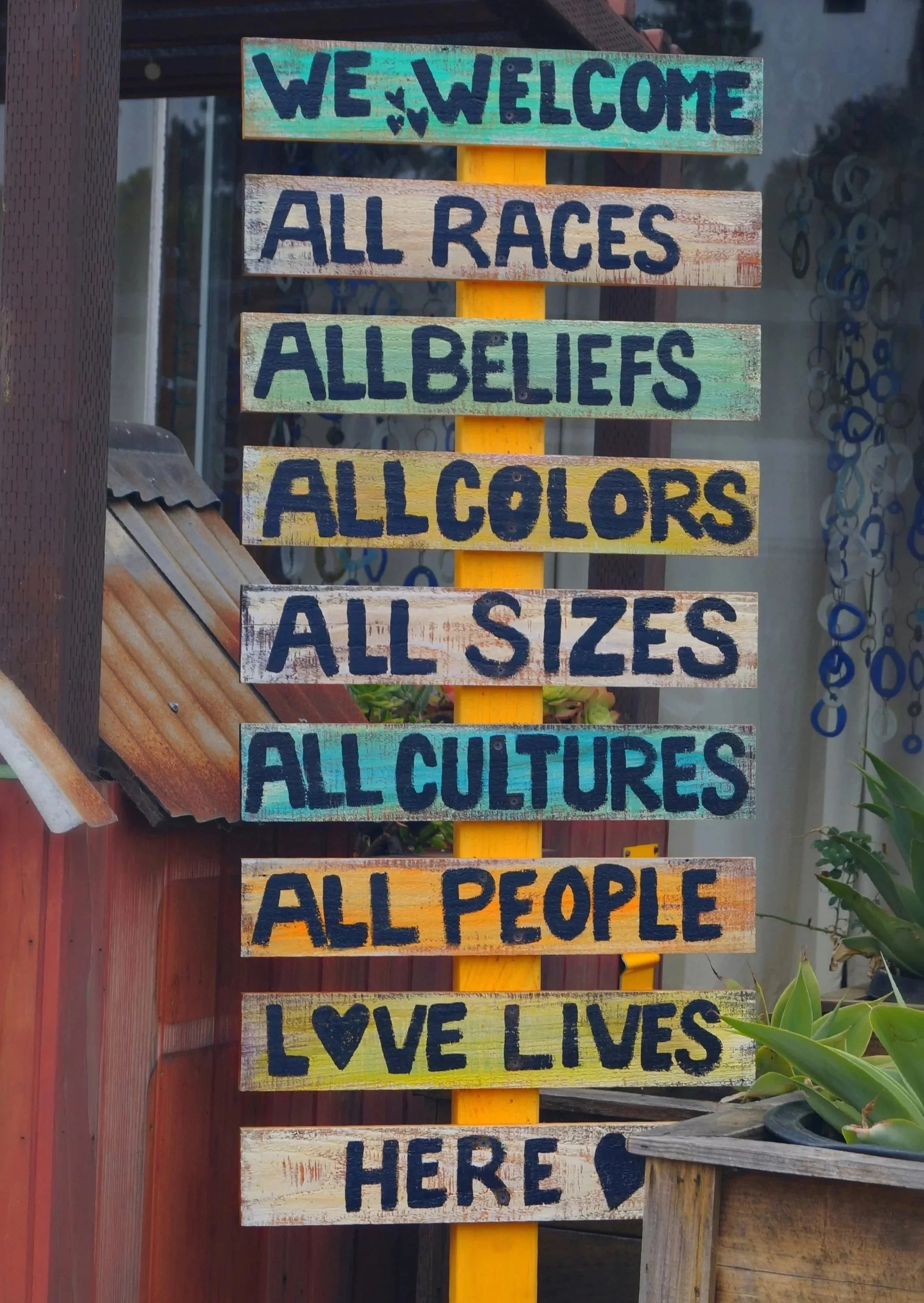
Photo by: Saimy Patel

Photo by: Kelly Sikkema
In practice, Liberation-Based Therapy is collaborative and relational. The therapy room becomes a space where clients are not asked to minimize their reality or perform wellness.
Therapists support a client’s journey through this process however it shows up, whatever time it takes. We look out for these aspects as a way to decolonize healing and allowing it to be a continued and evolving process. Below is not meant to occur in any kind of order but to give .
How it Shows Up in the Therapy Room
L
Locate the Harm, Stuckness, Grief
Together, therapist and client discover distress in context rather than character. This means identifying where harm, pressure, or constraint has shaped your nervous system and self-concept—without collapsing your experience into diagnosis or defect.
I
Interrupt Shame and allow for Feelings
Therapy becomes a space where shame is named and softened. Clients often experience reassurance as self-blame loosens and emotional responses are understood as adaptive, not pathological.
B
Breathe, Rest and Understand our Bodies
We honor exhaustion as information. Rest as a necessary response to sustained stress, survival, and care labor and noting where avoidance, pressure.
E
Express, Be Seen
Clients are invited into relief through being witnessed. No over-explaining, minimizing, or defending their reality. Expression becomes possible when connection is present.
R
Resist Internalized Burdens
Liberation includes naming what does not belong solely to you, inherited expectations, institutional harm, cultural narratives, or roles imposed by power dynamics.
A
Access Creativity & Meaning
Finding moments of reconnection with imagination, play, purpose, and values. These are forms of knowing that are frequently suppressed in survival mode.
T
Trust the Self
Clients are invited into relief through being witnessed. No over-explaining, minimizing, or defending their reality. Expression becomes possible when connection is present.
E
Evolve in Relationship
Clients are invited into relief through being witnessed. No over-explaining, minimizing, or defending their reality. Expression becomes possible when connection is present.
Therapy is paced with intention, attuned to the nervous system, and responsive to both present-day stressors and historical wounds. There is no rush. Our access to healing is our birthright.

Photo by: Rishikesh Yogpeeth
Modalities That Support Liberation
Modern psychotherapy has largely developed within Eurocentric, individualistic, and medicalized systems that emphasize diagnosis, symptom reduction, and standardization. These frameworks have shaped what is considered “evidence-based” and reimbursable, often without fully accounting for culture, power, history, or collective experience.
Liberation-Based Therapy is clear about this context and also clear about our responsibility to client care.
Liberation-Based Therapy also recognizes that healing has always existed beyond Western clinical models. We honor indigenous, ancestral, spiritual, trans-personal and community-based ways of knowing that understand emotional well-being as embodied, relational, and shaped by social conditions.
We provide clinically sound care attentive to the nervous system, history, and environment. Each therapist practices based on their interest and strengths. We use established therapeutic modalities, clinical assessments, and diagnostic frameworks as required for ethical practice, coordination of care, and insurance reimbursement. We collaborate with medical providers, psychiatrists, schools, and other treatment partners when appropriate, and we document care in accordance with professional and regulatory standards.
At the same time, we do not treat clinical tools, diagnoses, or neurobiological explanations as exhaustive or value-neutral. These are used relationally and intentionally, in service of the client not as fixed truths about identity or worth.
We firmly acknowledge that systemic and structural pressures are the root of most issues. Access to affordable and safe housing, clean food, drinking water, positive work environments
Our work may include:
Psychotherapy, Parts-based and Internal Family Systems–informed approaches
Emotionally focused and relational therapies
Somatic and body-based interventions
Trauma-informed, neurobiologically informed care
Ongoing assessment and treatment planning tailored to client goals
Accelerated Resolution Therapy, Emotionally-focused therapy, Ketamine-Assisted Therapy and more
We work within mental health systems because access to care matters; and we remain attentive to the limits of those systems—shaping treatment around the full context of a person’s life rather than asking clients to conform to a narrow clinical lens.

Photo by: Vitaly Gariev
What Healing Can Look Like
Healing is not a fixed endpoint or a promise of permanent resolution. It is an ongoing process of becoming.
Healing may include:
Greater coherence between inner experience and outer life
A stronger sense of agency and self-trust
The ability to hold complexity without self-erasure
Deeper connection to one’s body, emotions, and history
Increased capacity for meaningful relationship with yourself and others
Whether you choose to do this work to fight for yourself and to gain more strength to fight for others. Healing unfolds over time. It changes shape. It reflects the reality that growth, grief, insight, and integration often exist side by side.
Begin Your Work With Us
You deserve care that honors your full humanity and the context of your life.