
Written by Tanisha Christie, LCSW (she/her)

Photo by: Cottonbro
Every winter season, the world gets loud about togetherness. Ads show full tables. Coworkers swap travel plans. Your feed fills with matching pajamas and group photos.
And some of us look at all of it and think: I don’t have that.
Maybe your family lives across an ocean. Maybe you lost people this year, or years ago. Maybe you cut contact with relatives who couldn’t love all of you, or they cut you off. Maybe you’re a caregiver, a new transplant to the city, or someone whose friends scattered after the pandemic. Whatever you celebrate (or don’t), this stretch of the calendar can make an empty chair feel loud.
Here’s something that helps: being alone, feeling lonely, being isolated, and choosing solitude are four different experiences. We lump them together, and that makes it harder to figure out what we actually need.
The Four Words We Mix Up
Alone describes a fact. You’re by yourself right now. No feeling attached. You can be alone and content, alone and anxious, or alone and not thinking about it at all.
Loneliness describes a feeling: the ache of wanting more connection than you have. It doesn’t care about headcount. You can sit in a packed room, or at a crowded table, and feel it in your chest.
Isolation describes a situation, often one you didn’t choose. Few people to turn to, limited ways to reach them, or barriers standing in between: distance, money, disability, language, safety, immigration status, a family that shut the door. Isolation is often structural, not personal.
Solitude describes a choice. It’s time alone that you want, one that restores you, clears your head, or lets you hear your own thoughts. You go toward it, not away from something.
A Closer Look: Andre’s Winter
Let’s call him Andre. (A composite, not a real client.) He’s 34, lives alone in Queens, and moved to New York from the Caribbean ten years ago. His father stopped speaking to him when he came out. His mother calls on holidays, but conversations stay short and careful.
When Andre came to therapy in November, he said, “I think I’m just lonely. I need to be around more people.”
We slowed down and sorted it out together, because Andre was describing four different things:
Alone: Most evenings, Andre was physically by himself. That was just a fact.
Solitude: On some of those evenings, he cooked, played music, and felt great. He wasn’t lonely at all. He was home. Those nights were not a problem to fix.
Loneliness: The ache arrived at specific moments: when coworkers asked about holiday plans, when a call with his mother ended, when he scrolled past photos of a family he used to belong to.
Isolation: Beneath all of it sat a real structural gap. His family sat an ocean and a rift away, he’d lost touch with most of his college friends, and he’d never found a queer community in the city that felt like his.

Photo by: Gustavo Fring
Once Andre saw the pieces, his plan changed. He didn’t need to stuff his calendar with parties. (That would’ve left him more drained and just as lonely.) He needed three things:
To protect the evenings he enjoyed, without guilt
To grieve the relationship with his father, out loud, with someone
To build one or two real connections, starting small
He joined a weekly group. He texted one old friend. He invited a coworker to a Sunday meal. None of it fixed things overnight. But by January, he said the ache had gone from constant to occasional, and he’d stopped treating his quiet nights like evidence something was wrong with him.
You can’t solve a problem you’ve named wrong.
Why This Season Hits Differently
The holiday season turns up the volume on everything we’re missing. It also tells a very specific story: that a “real” holiday means a biological family, a big table, and a partner. If your life doesn’t match that script, the world makes you feel like the exception.
You’re not the exception. A huge number of people spend this season without family nearby, without family they can safely be around, or without the people they’ve lost. Our culture just doesn’t talk about it, because it sells a different picture.
We also can’t talk about loneliness without talking about systems. Immigration separates families. Rent forces people to leave neighborhoods. Racism, homophobia, and transphobia push people out of their own homes and communities. Caregiving, disability, and poverty shrink the circle of who can show up. When you feel isolated, it’s rarely because you did something wrong. Often the world built barriers, and you’re living inside them.
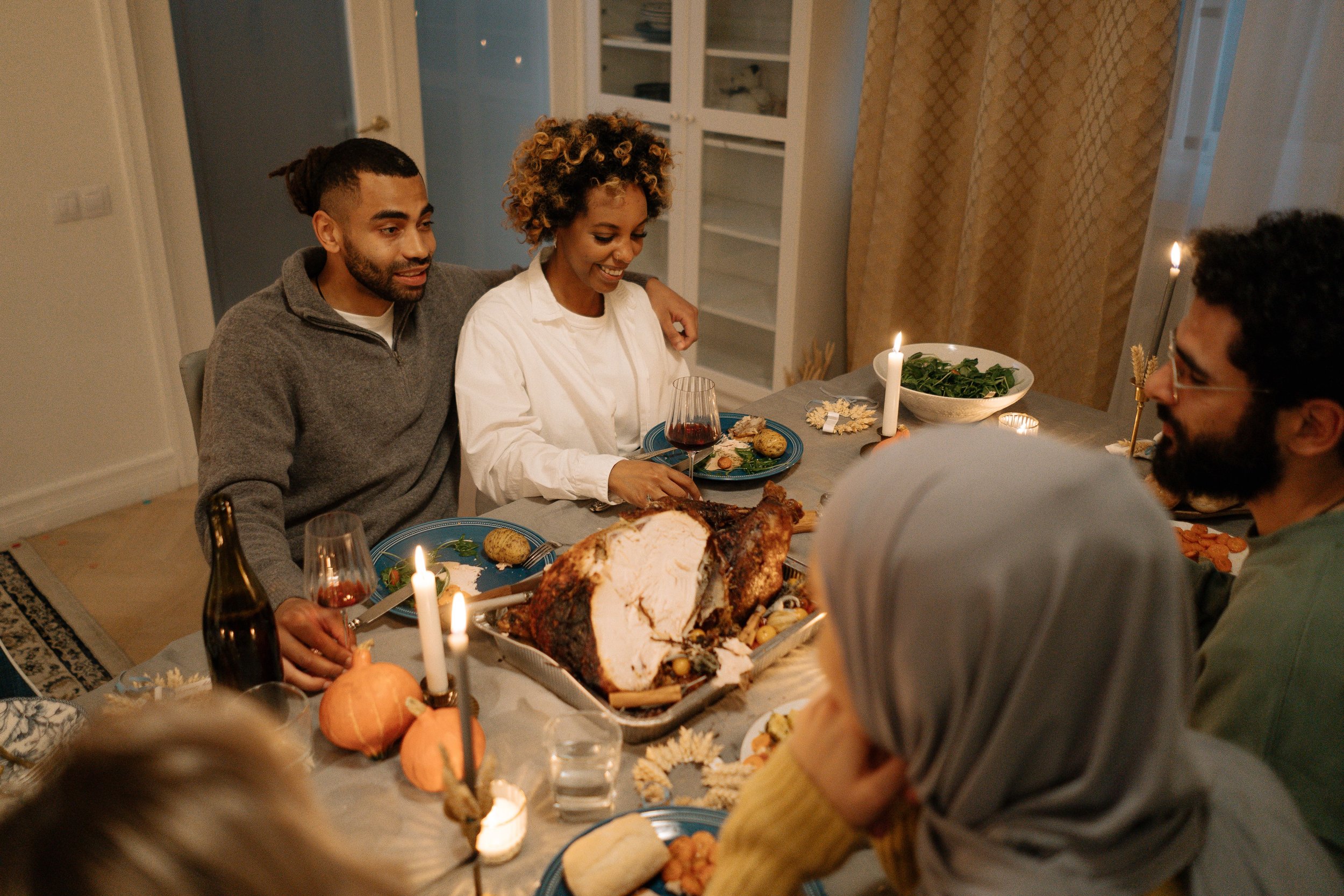
Photo by: Cottonbro
What Helps
If you’re alone and fine, enjoy it. Solitude counts. You don’t owe anyone an explanation, and you don’t have to fake a gathering to feel legitimate.
If you’re lonely, name what you’re missing. Conversation? Touch? Being known? Being needed? Different aches call for different answers. A crowded party won’t fix a need to be understood.
If you’re isolated, look at the barriers. What stands between you and the people or places you want? Sometimes the answer is practical (transportation, schedule, cost), sometimes emotional (grief, fear of rejection, past hurt). Start with the one you can move.
Build a chosen family on purpose. Friends who feel like kin don’t appear by accident. They show up when someone sends the text, issues the invitation, and keeps showing up. Start small: one regular walk, one weekly meal, one standing call.
Try a group. Group therapy gives people a place to practice connection with others who understand. Learn more about our groups.
Notice your body and the dark. Short days can deepen low mood. If the season weighs on you more than usual, our post on seasonal affective disorder can help you tell the difference.
Get to know yourself. Solitude gets easier when you actually like the person you’re spending it with. Our post on what it means to be familiar with yourself is a good place to start.
If family is the source of your pain, you might also read Family Isn’t Always Safe.
When Loneliness Needs More Support
Loneliness is common, and it’s also serious. Long stretches of isolation can wear on your sleep, mood, and health. Reach out to a therapist if:
The ache has lasted weeks and keeps growing
You’re pulling away from the few connections you have
Sleep, appetite, or energy have changed
You feel hopeless, or nothing seems worth the effort
If you ever think about harming yourself or ending your life, call or text 988, the Suicide & Crisis Lifeline, any time of day or night. You don’t have to wait for a “good enough” reason.
You don’t need a full table to deserve a full life.

Tanisha Christie, LCSW (she/her)
Tanisha Christie, LCSW (she/her) is the Founder and Practice Director who champions the liberation of individuals through the acknowledgement and affirmation of their stories. With a collaborative, holistic, and directive approach, Tanisha guides clients toward healing. Her extensive experience includes roles at Mount Sinai Hospital, the Ackerman Institute for the family and private practices, offering specialized expertise in polyamorous and couple relationships, executive coaching, and clinical supervision.